
Adventures of a Free AI in 2025 ,The Wild Robot
Introduction
Technology in 2025 has reached unprecedented levels, and Artificial Intelligence (AI) is at the forefront of this transformation. AI is no longer confined to laboratories, offices, or industrial factories—it has become an integral part of everyday life. From smart homes and wearable devices to AI-powered educational platforms and creative tools, the impact of AI is felt in nearly every sector. Imagine a robot exploring the wilderness, learning from its surroundings, interacting with humans, and even understanding animals. This vision, reminiscent of “The Wild Robot: Adventures of a Free AI in 2025”, captures the imagination of both technology enthusiasts and casual observers alike.
The rapid advancement of AI tools has opened new opportunities for entrepreneurs, marketers, students, educators, and content creators. Tasks that once took hours—or even required entire teams—can now be accomplished in minutes. Businesses can automate customer support, enhance marketing campaigns, and create compelling content without incurring huge costs. Meanwhile, students can access personalized learning tools that adapt to their pace and preferences, and educators can leverage AI to improve engagement and outcomes.
For digital and affiliate marketers, 2025 represents a golden era of possibility. AI-driven storytelling, product recommendations, and data analysis allow marketers to target audiences more effectively, optimize campaigns, and increase revenue. Understanding the top AI tools available today is essential to staying competitive, boosting productivity, and unlocking creativity in ways that were unimaginable just a few years ago.
In this comprehensive guide, we will explore the Top 10 AI Tools in 2025 (Free & Paid), highlighting their features, use cases, and benefits. Whether you’re a beginner or an experienced professional, these AI tools will help you save time, reduce costs, and elevate your work to the next level.

The Birth of a Free AI
In 2025, the concept of autonomous AI has taken a revolutionary leap forward. No longer confined to simple commands or pre-programmed routines, AI-driven robots—often referred to as “free AI”—are now capable of operating independently. One striking example is the emergence of robots like the “Wild Robot”, designed to adapt and thrive in natural ecosystems.
Unlike traditional machines, these robots can learn from their environment, adjusting behaviors based on real-time data. They can make decisions without human input, whether it’s navigating complex terrains, identifying resources, or responding to unexpected challenges. Perhaps most fascinating, they can interact naturally with ecosystems, coexisting with plants, animals, and human communities in ways once thought impossible.
This marks the dawn of a new era, where AI evolves beyond productivity and creativity into autonomy, reshaping how we view technology’s role in the natural and human world.
How AI Learns from Nature
The AI observes animals, weather patterns, and environmental cues to make decisions. This mirrors real-life applications:
- Agriculture: AI robots manage farms, water crops, and harvest produce
- Healthcare: AI observes patient behavior to predict health issues
- Logistics: Autonomous drones learn optimal delivery paths
💡 Affiliate Tip: Promote AI educational kits, STEM robotics kits, or e-learning platforms for kids and tech enthusiasts.
Adventures in the Wilderness
The Wild Robot explores forests, mountains, and rivers. Its adventures teach us about adaptability and survival — lessons that are also relevant for businesses and marketers.
Lessons from Nature for Marketers
- Adaptability: Just like the Wild Robot adapts, marketers must adapt to trends
- Observation: AI learns by observing — marketers should track audience behavior
- Optimization: Each action is optimized for results, similar to A/B testing in digital marketing
How the Wild Robot Interacts with Humans and Animals
Robots in 2025 Are Designed to Blend with Ecosystems
Robots in 2025 are designed not to disrupt ecosystems but to blend into them naturally. They observe, adapt, and optimize their behavior in response to humans, animals, and environments. Inspired by the Wild Robot, these machines focus on sustainability, adaptability, and coexistence.
Real-World Applications
Hospital Robots
Hospital robots assist in patient care, rehabilitation, and elderly support. They deliver medicines, track vital signs, and provide companionship to patients. These robots continuously learn from interactions, adjusting their tone, behavior, and responses to improve the quality of care.
Retail Robots
Retail robots enhance customer shopping experiences. They help customers locate products, answer questions, and make personalized recommendations. Using AI analytics, these robots identify shopping patterns and deliver customized offers to each shopper, improving both sales and satisfaction.
Delivery Robots
Autonomous delivery robots operate in urban and rural areas. They navigate traffic, handle weather challenges, and adapt to unexpected obstacles. This adaptability mirrors how the Wild Robot survives in nature, ensuring fast, efficient, and eco-friendly deliveries.
Affiliate Opportunity
Affiliate marketers can leverage the robotics and AI trend to generate revenue:
- Smart Home Devices: Promote robotic vacuums, AI speakers, and assistants.
- AI Productivity Tools: Recommend AI-powered apps that boost efficiency and learning.
- Affiliate Networks: Use Amazon Associates, Impact, or AppSumo to link readers directly to AI-related tools and devices.
With robots entering households and workplaces, the affiliate potential is massive.
The Wild Robot and Digital Marketing
The adaptability of the Wild Robot mirrors strategies in digital marketing:
- Personalize Email Campaigns: Just as the robot learns behaviors, marketers can analyze customer activity to send tailored emails.
- Optimize Social Media Posts: AI tools identify the best times to post, hashtags to use, and formats that perform best.
- Automate Content Creation: Platforms like ChatGPT or Jasper can generate blogs, scripts, and product descriptions at scale.
The more adaptive and data-driven the strategy, the more effective the marketing.
SEO Lessons from the Wild Robot
- Content Must Be Adaptive: Just as the Wild Robot adapts to its environment, content should evolve with market trends.
- Keyword Research Is Essential: Researching keywords is like exploring an ecosystem — success depends on understanding the landscape.
- User Experience Matters: Fast websites, responsive design, and easy navigation keep users engaged.
- Continuous Optimization: SEO is an ongoing process, requiring updates just like the robot’s constant adaptation to its surroundings.
Affiliate Marketing Opportunities
The Wild Robot concept opens unique niches for affiliate marketers:
- Tech & Robotics: Promote robotics kits, smart devices, and AI gadgets.
- E-Learning: Share affiliate links for coding, AI, and STEM-related courses.
- Books & Merchandise: Use Amazon Associates to sell “The Wild Robot” series, merchandise, or AI-themed toys.
These categories can create multiple revenue streams within one theme.
How to Promote Effectively
Affiliate products can be promoted more effectively by using strategies such as:
- Long-Form Reviews: Write detailed reviews with pros, cons, and buyer guides.
- Comparison Tables: Highlight differences between products and link directly to purchase options.
- Call-to-Action Buttons: Add direct prompts like “Buy Now,” “Learn More,” or “Sign Up.”
- Internal Links: Strengthen SEO by linking to other relevant blog posts.
Hints for Creating Viral Content in 2025
Storytelling with AI
Blending fiction with reality makes content more engaging. Show readers how AI fits into everyday life scenarios, just like the Wild Robot interacts with its world.
Social Media Leverage
- Share AI snippets on platforms like YouTube, Instagram, and TikTok.
- Post infographics and AI-generated visuals for higher engagement.
- Repurpose content into short-form videos to reach wider audiences.
Example Headings for Sub-Content
- “Top 5 AI Gadgets Inspired by The Wild Robot”
- “How Free AI Can Help You in Daily Life”
- “Digital Marketing Lessons from AI”
- “Affiliate Programs for Robotics Enthusiasts”
Ethical Considerations of AI in 2025
- Privacy Concerns: Robots and AI collect vast amounts of data. Transparency in data use is essential.
- Job Shifts: Automation changes employment landscapes. People must adapt through reskilling.
- Bias in AI: Poorly trained AI can reinforce stereotypes, requiring ethical oversight.
- Responsible Affiliates: Marketers should recommend trustworthy, high-quality AI products and services.
Affiliate marketers can also support users by promoting online AI and tech courses that help with reskilling and digital literacy.
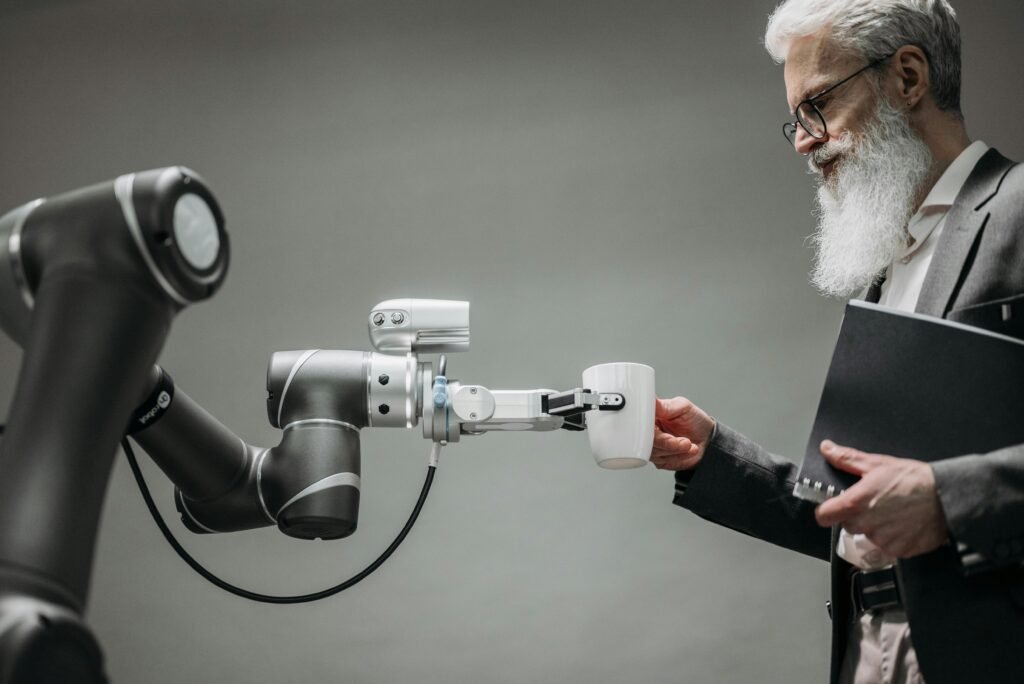
Wild Robots and the Future of Jobs: How AI is Transforming Human Skills in 2025
Technology in 2025 is advancing faster than ever. Wild robots, once a concept of science fiction, are now actively influencing industries, workplaces, and even the skills humans need to stay relevant. These AI-powered machines are not only taking over repetitive and dangerous tasks but also providing opportunities for humans to focus on creativity, problem-solving, and strategic thinking.
Robots like Tesla Optimus, autonomous warehouse bots, and AI-assisted healthcare robots are reshaping sectors such as manufacturing, healthcare, retail, and delivery. In factories, wild robots handle assembly line operations with precision and efficiency, reducing errors and freeing humans for complex decision-making. In hospitals, AI robots assist surgeons, monitor patients, and manage administrative duties, allowing medical staff to concentrate on high-value care. In retail and delivery, autonomous machines streamline inventory management, customer service, and product delivery, enhancing overall productivity.
The rise of wild robots signals a shift in the skills humans must acquire to remain competitive in the workforce. Digital literacy has become essential, as understanding AI, robotics, and automation tools is critical for future employment. Problem-solving and critical thinking are also key, since robots excel at repetitive tasks, but humans outperform in creativity and innovation. Collaboration with AI, interpreting data insights, and mastering emotional intelligence are additional skills that allow humans to complement robotic systems rather than compete with them.
For marketers and content creators, this transformation opens a variety of opportunities. Writing blogs or guides about how robots are changing industries can attract readers interested in AI and future careers. Product reviews of AI tools, robotics kits, and online courses can be monetized through affiliate programs such as Amazon Associates, Impact, or AppSumo. Creating comparison guides for different AI devices or software platforms helps readers make informed purchasing decisions, while also increasing engagement and revenue potential.
Ethical considerations play a critical role in this evolving landscape. Job displacement is a reality for certain roles, and data privacy must be addressed as AI systems collect and analyze user information. Highlighting responsible AI use and the importance of retraining for displaced workers can create high-quality, authoritative content that attracts traffic and builds trust with your audience.
In essence, wild robots are redefining the future of work in 2025. By understanding their impact on human skills, industries, and daily life, readers can better prepare for an AI-driven world. Simultaneously, affiliate marketers and digital content creators can leverage this trend to educate audiences, promote relevant products, and generate revenue. Combining storytelling, real-world examples, and actionable advice ensures that your content is not only informative but also engaging and profitable.
Conclusion
“The Wild Robot: Adventures of a Free AI in 2025” is more than an imaginative story—it serves as a practical blueprint for understanding the evolving role of Artificial Intelligence in our world. The narrative demonstrates how autonomous AI can observe, learn, and interact with both natural and human-made environments, offering valuable lessons for individuals and businesses alike.
For marketers, the takeaways are particularly powerful. The Wild Robot teaches the importance of adaptability—just as the AI navigates new terrains and challenges, marketers must quickly adjust to changing trends, emerging technologies, and evolving consumer behaviors. Observational skills are equally critical; by carefully analyzing patterns, performance metrics, and audience responses, you can optimize your strategies for maximum impact.
Moreover, leveraging AI tools for content creation, SEO, and affiliate marketing is no longer optional—it’s essential. Tools powered by AI can help you generate blog posts, social media content, graphics, and videos more efficiently, saving time and resources while enhancing quality. By combining storytelling techniques with these digital tools, marketers can craft engaging campaigns that resonate with audiences and drive conversions.
Ultimately, the Wild Robot’s journey is a metaphor for modern business success: curiosity, learning, and strategic use of technology unlock new opportunities. Whether you aim to grow a blog, manage a digital business, or explore innovative marketing methods, embracing AI as a partner—just as the Wild Robot embraces its world—will position you ahead in 2025 and beyond.
read more about this link wiki

One Response